piedra natural edificio o natural stone in a building

Choosing Natural Stone for International Projects:

In architecture, natural stone often begins as an aesthetic decision. Color, texture, and integration with the surrounding environment are usually the first criteria considered. However, when a project crosses borders, that initial visual impression quickly becomes secondary.

In international projects, selecting natural stone is a strategic decision.

It is no longer only about how the material looks, but about how it performs over time, how it is supplied, how it is coordinated within complex project structures, and how it responds to technical, regulatory, and logistical requirements.

The difference between a supplier and a true technical partner begins here.

Real Availability and Continuity of Supply

One of the most common mistakes in international projects is selecting a material without properly assessing its real production capacity. Large-scale developments require consistency. Homogeneity in color, texture, and mechanical performance must be maintained not only in one batch, but throughout months — sometimes years — of phased supply.

A quarry may produce an excellent initial block, but international projects demand continuity.

Extraction capacity, production planning, and stock management are not secondary considerations. They are critical elements that ensure the project advances without interruption, unexpected changes in appearance, or delays that compromise construction timelines.

When natural stone is integrated into large façades, public spaces, or urban infrastructure, supply reliability becomes part of the structural strategy of the project.

Large Format as a Technical Advantage

Large-format stone is often perceived as an aesthetic choice. In reality, it is also a technical and operational decision.

Using larger pieces can result in:

  • Fewer visible joints

  • Greater visual continuity

  • Reduced installation time

  • Optimized structural anchoring systems

  • Improved overall project coherence

However, large format requires consistent quarry performance and advanced processing capabilities.

Not every operation can guarantee stable, dimensionally reliable blocks suitable for large-format transformation. When architectural design depends on scale and continuity, the quarry’s capacity directly influences feasibility.

In international projects, large format is not simply about size — it is about precision, stability, and confidence in supply.

Technical Coordination Within Complex Project Structures

International projects involve multiple stakeholders:

  • Architectural studios

  • Engineering firms

  • Main contractors

  • Project managers

  • Public authorities

  • System manufacturers

Natural stone must integrate seamlessly into this network of decisions.

This requires clear technical documentation, accessible testing reports, defined specifications, and the ability to respond quickly to design modifications or site adjustments.

Experience in international markets provides a critical advantage: anticipating potential challenges before they arise.

Understanding how different construction cultures operate — how specifications are drafted, how approvals are processed, how timelines are structured — reduces friction and increases project efficiency.

Natural stone is not an isolated element. It becomes part of a coordinated technical ecosystem.

Logistics and Structured Planning

International supply demands precise logistical coordination:

  • Packaging and material protection

  • Load optimization

  • Transport scheduling

  • Ongoing communication with destination teams

  • Delivery phase sequencing

Natural stone is not a standardized industrial product manufactured under identical conditions. It is a natural material that requires professional judgment at every stage — from extraction to installation.

Poor logistical planning can affect not only construction progress but also the global perception of the project.

In high-visibility developments, reliability is as important as aesthetics.

Responsibility and Environmental Management

Increasingly, international projects require traceability, responsible quarry management, and genuine environmental commitment.

Sustainability cannot remain a marketing statement. It must be integrated into operational practice through:

  • Progressive quarry restoration

  • Responsible resource management

  • Waste optimization

  • Long-term environmental planning

In many international tenders and private developments, these factors directly influence final decision-making.

Environmental responsibility has become part of technical evaluation.

Beyond the Material

Choosing natural stone for an international project is not merely selecting a finish.

It is selecting:

  • A production structure

  • A technical system

  • A planning methodology

  • An experienced partner

Natural stone provides identity and permanence to architecture. Yet it is the organization behind the material — the capacity to plan, coordinate, document, and deliver — that ensures this identity is constructed with precision.

In international projects, the difference does not lie only in the stone itself.

It lies in how it is managed.

Arenisca-Les-Borges

How to choose a sandstone based on its real performance

For many years, sandstone has been perceived as a relatively uniform material. A natural stone with a recognisable appearance and a set of well-known architectural applications. However, this simplified view does not reflect the technical reality of the material, nor does it explain why some projects age gracefully over decades while others begin to show problems far earlier than expected.

Sandstone is not a standardised product. It is the result of different sedimentary processes, of strata with their own characteristics, and of technical decisions that condition its behaviour from the quarry to the finished project. Understanding this complexity is essential in order to make the right choices and to work with stone using sound technical criteria.

Variety matters more than it seems

Within the same geographical area, sandstones can behave very differently. Variations in grain size, compaction or internal composition lead to measurable differences in key parameters such as water absorption, mechanical strength or resistance to wear.

This is why not all sandstones are suitable for the same applications, even when they appear visually similar. Some varieties present a fine grain and a more homogeneous structure, favouring stability in large façade surfaces. Others offer greater hardness or lower porosity, making them more suitable for paving or areas subject to higher mechanical demands.

Choosing sandstone solely based on colour or texture is therefore an incomplete decision. Material selection must take into account how the stone will perform over time and under real service conditions.

Material selection as a design decision

One of the most common mistakes in projects involving natural stone is postponing material selection until the final stages of design. At that point, sandstone becomes just another finish, rather than an integral part of the construction solution.

When selection is made early in the process—considering the intended use, exposure to water, climate conditions and mechanical loads—the stone integrates naturally into the project. The material is not forced beyond its capabilities, nor is it expected to perform in conditions for which it was never intended.

Experience shows that many pathologies associated with natural stone do not originate in the material itself, but in poor initial decisions. Sandstone does not fail by nature; it fails when it is used without technical understanding.

Extraction also conditions performance

Once the appropriate sandstone variety has been selected, the next critical factor is extraction. This stage, often invisible outside the quarry, has a direct influence on the stone’s final performance.

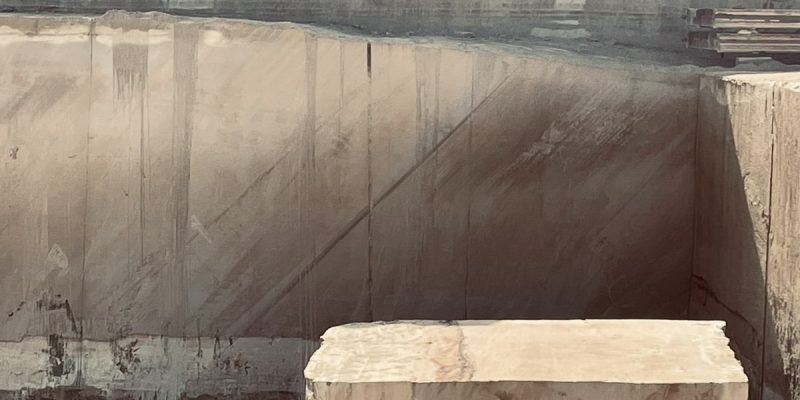
The orientation of the cut in relation to the strata, block size and respect for the stone’s internal structure directly affect stability, yield and behaviour on site. Not all sandstones allow the same formats, nor do they respond in the same way to cutting.

Extraction is not a neutral or purely logistical process. It is a technical phase that must be adapted to each sandstone variety and to the characteristics of the quarry face being worked at any given time. Ignoring this reality introduces unnecessary risks that may only become evident later in the life of the project.

Sandstone as a construction material, not a finish

When sandstone is treated merely as a finish, much of its value is lost. Natural stone is not an interchangeable surface layer; it is a construction material with its own logic, which must be understood and respected.

Working with sandstone as a true construction material means understanding its formation, selecting the appropriate variety and extracting it in a way that preserves its inherent properties. This approach leads to solutions that are more durable, stable and technically coherent, while also remaining honest from an architectural point of view.

The difference between a project that ages well and one that begins to fail prematurely is rarely the stone itself. It is almost always the set of decisions made before the stone ever reaches the site.

Criteria over catalogue

In an increasingly fast-paced market, it can be tempting to treat natural stone as a permanent catalogue product. Quarry reality, however, is very different. Availability, characteristics and performance are directly linked to the terrain and to the strata being worked at any given time.

Understanding this reality allows architects and developers to design with greater coherence, accepting natural stone for what it truly is: a material shaped by its geological context and by the way it is extracted.

Sandstone should not be imposed on a project.
It becomes part of the solution when it is properly understood.

Corte de piedra cantera

Natural stone finishes

When a stone block leaves the quarry, its surface is rough, irregular, and apparently limited in applications. However, that first impression is only the beginning of a transformation process. It is through finishes that natural stone reveals its full potential, adapting to different architectural uses and aesthetic expressions.

Finishing as a strategic decision

A single block of sandstone or limestone can become a non-slip pavement, a sober façade cladding, or a high-gloss countertop, depending on the surface treatment it receives. The choice of finish is a strategic decision: it is not only visual, it also influences resistance, maintenance, and durability.

At SAEZ Sandstone we understand finishes as a bridge between nature and design. Each texture not only communicates an aesthetic but also solves a technical requirement.

Main types of finishes

  • Polished: provides a shiny and smooth surface that maximizes the natural colors and veins of the stone. It is ideal for representative interiors and spaces where elegance is required.

  • Sandblasted: produced by projecting sand at high pressure onto the surface of the stone. The result is a matte, homogeneous, slightly rough texture, highly valued outdoors for its resistance and natural look.

  • Bush-hammered: created by striking the surface with a pointed tool. It produces a uniform, rough relief that is perfect for non-slip pavements or façades with character.

  • Flamed: mainly applied to stones with a high quartz content, this method exposes the surface to intense flames that generate micro-fractures. The effect is a natural, rough texture with excellent wear resistance.

History and tradition of natural stone finishes

Stone finishes have a long history. In classical architecture, temples and palaces displayed polished surfaces that reflected light and conveyed solemnity. In medieval squares, on the other hand, rougher textures dominated, able to withstand constant foot traffic and daily use. This cultural heritage remains visible today: each finish communicates an intention, a function, and a dialogue with its environment.

Over time, stonemasons perfected their manual techniques, and later mechanization opened the door to more homogeneous production. Today, digital technology allows precise control of every parameter, yet the essence remains the same: to interpret the stone and give it the finish best suited to its function.

Aesthetic and functional roles

Each finish plays a dual role:

  • Aesthetic, by enhancing colors, highlighting or softening veins, and shaping how light interacts with the surface.

  • Technical, by determining how the stone performs in use. A polished finish may be perfect for an interior lobby but unsuitable for a public square where non-slip safety is a priority.

This duality makes finishes a design tool. It is not just about beautifying the stone, but about giving it the right response for each environment.

Innovation and versatility

Finishes have also evolved. Today it is possible to combine traditional techniques with digital control tools that ensure uniformity even across large surfaces. This innovation makes it possible to meet international project requirements where material consistency is essential.

Furthermore, the versatility of finishes opens the door to new uses: from urban furniture to contemporary interior claddings that aim to express both natural authenticity and modernity. The same material can belong in classical spaces and avant-garde projects thanks to the richness of its finishes.

Application examples

In public spaces such as squares or pedestrian walkways, a bush-hammered finish provides the safety of a non-slip pavement designed to withstand intensive use. In airports or railway stations, sandblasted surfaces guarantee durability and consistency across large expanses. In high-end interiors, polished stone becomes a synonym of elegance, reflecting light and highlighting color in a striking way.

Each project poses a different challenge, and in the finish lies much of the answer.

Sustainability and resource efficiency

Finishing is also integrated into circular economy practices. Many offcuts that are not suitable for large formats are transformed into smaller elements —curbs, steps, or furniture— that receive high-quality finishes as well. This ensures that every fragment of stone finds a dignified and sustainable use.

In addition, a well-executed finish prolongs the lifespan of the material and reduces maintenance needs, contributing to more responsible and durable construction.

Conclusion

Finishing is the stage where natural stone reveals its true identity. Beyond the raw block, it is here where it acquires character, functionality, and architectural value.

At SAEZ Sandstone, we see finishes as an extension of design: technical and aesthetic decisions that ensure each piece fulfills its function and elevates the experience of the space. Because on the surface of stone, it is not only light that reflects —it is the quality of the project itself.

Corte en cantera SAEZ

Cutting at the Quarry: When Technique Makes the Difference

When we think about natural stone as a construction material, we tend to picture grand façades, noble paving or decorative pieces full of texture. But before reaching the construction site, each of those elements began with a much more technical — and often invisible — process: quarry cutting. At SAEZ Sandstone, this is not just a logistical step. It’s a strategic decision that defines the quality, durability and performance of the stone in every project.

Technology and craftsmanship: an essential balance

Stone extraction at our La Floresta quarries (Lleida, Spain) is based on a rigorous combination of experience, geological knowledge, and precision technology. It’s not about cutting just anywhere: each quarry face must be carefully read, considering the orientation of the veins, the hardness of the material, the terrain structure and the intended use of the blocks.

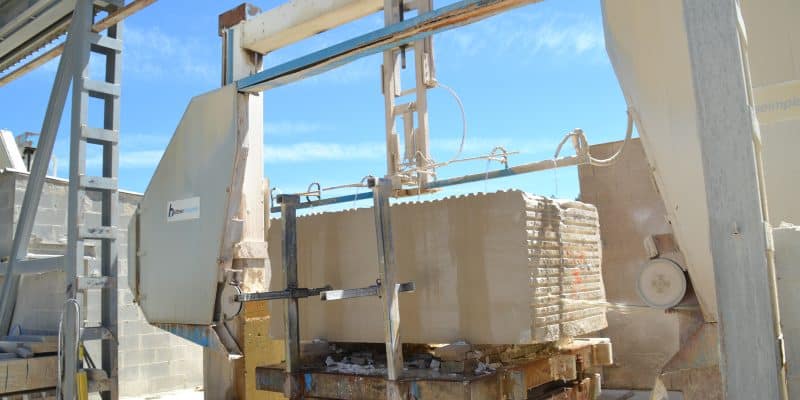
Here, the diamond wire saw plays a central role. Unlike more aggressive tools, this machine allows for smooth, clean and accurate cuts that preserve the structural integrity of the block and significantly reduce waste. It operates by rotating a tensioned wire embedded with industrial diamonds, capable of slicing through massive stone blocks with millimeter precision.

This cutting technique not only improves extraction efficiency, but also avoids internal microfractures that could compromise the stone’s structural integrity during handling, finishing or installation.

Cutting at the quarry is part of the design process

The chosen cutting plane at the quarry is never arbitrary: it directly affects the texture, visual pattern, dominant color and finishing possibilities of the stone. In other words, cutting well means anticipating the aesthetic outcome of the final project.

For example, when working with our highly demanded Floresta Marrón Sandstone, it is essential to respect the direction of its natural veining to maintain consistent visual appeal. A poor cut can “break” the visual language of the stone, creating undesired contrasts. That’s why SAEZ applies a tailored technical approach to each block, adjusting cutting parameters to the stone’s unique properties.

The result: better material yield, less waste, and greater predictability for architects and designers who rely on stone that meets both technical and aesthetic criteria from day one.

Made-to-measure cutting for versatile formats

Once extracted, a precisely cut block can be processed into a wide range of formats: paving slabs, façade panels, carved blocks, or special pieces such as stair treads, countertops or urban furniture. This degree of versatility wouldn’t be possible without a well-executed first cut.

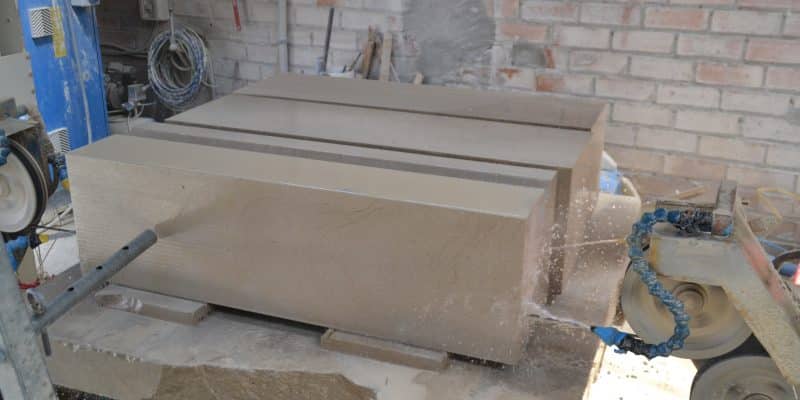
Moreover, the initial cut determines the feasibility and quality of the final finishes. A clean, even surface allows for treatments such as polishing, sandblasting, or bush-hammering to be applied with optimal results. These finishes not only enhance the appearance of the material but also influence its technical behavior — slip resistance, weather durability, texture retention, and so on.

An invisible step with visible impact

Although rarely mentioned in brochures or architectural plans, quarry cutting is one of the most impactful phases in the production of stone. A proper cut prevents internal stress, ensures regular surfaces, and facilitates transport and handling throughout the supply chain.

In one of our most iconic projects — the Burberry store façade in Barcelona — the design required perfect chromatic uniformity with uninterrupted visual flow. To achieve this, we selected consecutive blocks cut with a diamond wire saw, preserving the continuous veining across the visible façade. The result was a sober, elegant and technically flawless installation.

The expertise that transforms stone

Machinery alone is not enough. At SAEZ Sandstone, what makes the difference is the human team who reads each quarry face and decides how to approach the cut. From our field engineers to our specialized operators, each block goes through a deliberate process of analysis, testing and constant adjustment.

With over 50 years of experience, we are able to make technical decisions quickly, adapt to shifting conditions in the quarry, and ensure consistent quality in the final product — right from the source.

Conclusion: value begins at the quarry

In a world where natural stone competes with synthetic materials, precision extraction is one of our greatest strengths. Because offering high-quality stone is not enough — we must ensure that quality is preserved from the very first cut through to final installation.

That’s why at SAEZ Sandstone, we treat each block as a unique piece and each cut as a decisive action. Architecture begins in the quarry. And it’s through technique, craftsmanship and precision that we enable stone to speak the language of contemporary design.

📐 Want to learn more about our cutting and extraction processes? Visit our blog and discover how we work with natural stone from the very beginning.
www.saezsandstone.com/blog

stones for natural projects

How to Choose the Perfect Finish for Your Natural Stone Project

How to Choose the Perfect Finish for Your Natural Stone Project

Natural stone is more than just a material: it’s a design statement. Its texture, color, and finish determine not only the appearance of a space but also its technical performance and integration into the architectural context. In this article, we explore the most widely used stone finishes, emphasizing their functional and aesthetic applications in international architectural projects. We also offer practical recommendations based on real-world experience.

1. Why finishes matter

A stone’s finish alters its texture, slip resistance, gloss level, and often its durability in outdoor environments. The same stone may offer very different results depending on the surface treatment. That’s why finish selection is not only a matter of taste—it’s a matter of performance.

For example, in areas with heavy foot traffic or accessibility requirements, a certified anti-slip surface is essential. In indoor spaces like museums or luxury hotels, visual coherence and ease of maintenance become key factors. Finishes also affect how stone behaves under UV exposure, rainfall, and pollution, making the selection crucial for long-term performance.

2. Main finishes and their uses

Bush-hammered

Created by controlled impact, this finish produces a rough, non-slip texture. It’s one of the most common treatments for exterior use in both public and private spaces.

  • Advantages: excellent traction, natural appearance, durable under stress.
  • Recommended for: wet or icy environments, public squares, ramps, stairs, civic centers.

Flamed

By applying intense heat, the surface flakes off slightly, producing a rough and natural feel. It’s an ideal compromise between technical performance and aesthetics.

  • Advantages: organic look, slip resistance, good for modern design.
  • Recommended for: facades, plazas, terraces, outdoor furniture, coastal promenades.

Honed

An intermediate polish resulting in a matte, smooth texture. This finish maintains color integrity while eliminating reflections. It balances practicality and elegance.

  • Advantages: soft feel, low porosity, modern look, easy to maintain.
  • Recommended for: interiors, stairs, retail spaces, hotels, public lobbies.

Polished

This finish provides a glossy, mirror-like surface. It emphasizes the stone’s natural color, pattern, and veins. Common in luxury and decorative applications.

  • Advantages: high-end appearance, easy to clean, light-enhancing, elegant contrast.
  • Recommended for: lobbies, counters, feature walls, museum interiors, upscale residences.

Sandblasted

Using high-pressure sand, this finish produces a uniform, slightly rough surface. It offers a balanced compromise between texture and visual clarity.

  • Advantages: consistent surface, non-reflective, soft visual texture.
  • Recommended for: contemporary facades, courtyards, exterior paving, garden walkways.

3. Combining function and style

Architects often combine finishes in a single project. For instance, exterior staircases might have bush-hammered treads with honed risers. Ventilated facades can alternate between flamed and honed pieces to manage light reflection and depth.

Some designers use polished details to create focal points within a honed or sandblasted background, offering contrast and guiding visual attention. This layered approach enriches the architectural expression without losing material unity. It also addresses technical demands without aesthetic compromise.

4. Finish behavior by stone type

Not all finishes are equally effective across all stones. Sandstone responds well to rough textures like flamed and bush-hammered. Limestone performs best with honed and polished surfaces. High-porosity stones may require sealing post-treatment, especially in freeze-thaw climates.

At SAEZ, we perform lab tests and produce sample panels tailored to each project to ensure aesthetic accuracy and functional compliance. We help architects and contractors choose the best option depending on climate, intended use, and installation system.

5. Compliance and certifications

Finishes must meet specific standards: slip resistance, abrasion, porosity, water absorption, fire rating, etc. For public and international projects, we deliver detailed technical documentation and certification (UNE, EN, ASTM), aligned with the country’s legal framework. This accelerates approval processes and ensures reliability in execution.

6. Sustainability and technical efficiency

Mechanical treatments (bush-hammered, honed, sandblasted) have a smaller ecological footprint compared to chemical or resin-based processes. Choosing sustainable finishes supports LEED, BREEAM, and other green certifications by reducing waste, emissions and energy use. We also optimize water consumption during treatment to lower environmental impact.

Additionally, finishes applied in origin reduce on-site labor and dust generation, improving site safety and reducing construction time. This efficiency adds measurable value in international tenders.

7. Real-world experience and support

We have applied these finishes to diverse projects—from historic public stairs to premium wellness centers. In coastal developments, flamed finishes are often selected for their weather resistance. In historic city centers, bush-hammered sandstone blends tradition and performance. Each case requires a tailored approach.

That’s why our team provides end-to-end technical assistance:

  • Full-scale mock-ups and finish tests
  • On-site installation guidance
  • Maintenance and cleaning recommendations
  • Custom adjustments based on end-use and region

Conclusion

Choosing the right finish is just as critical as choosing the right stone. At SAEZ Sandstone, we deliver customized technical solutions and factory-applied finishes suited to your project’s unique demands. Our experience in international markets ensures quality, compliance, and visual excellence. Because a well-finished stone doesn’t just look better—it performs better.