Natural stone as sandstone has accompanied humankind since the earliest days of construction. Among all stones, sandstone holds a unique place: it is a material formed over millions of years and yet seamlessly integrated into contemporary architecture. Sandstone is not only a sedimentary rock—it is a geological testimony, a building resource, and a cultural symbol.
Sandstone forms through the accumulation and compaction of quartz grains, feldspar, and fragments of other rocks. Transported by rivers, seas, and winds, these sediments are deposited in layers that, over time, become cemented by minerals such as silica or calcium carbonate. This process, lasting millions of years, produces a material rich in veins, colors, and textures, which explains the great variety of sandstones available today.
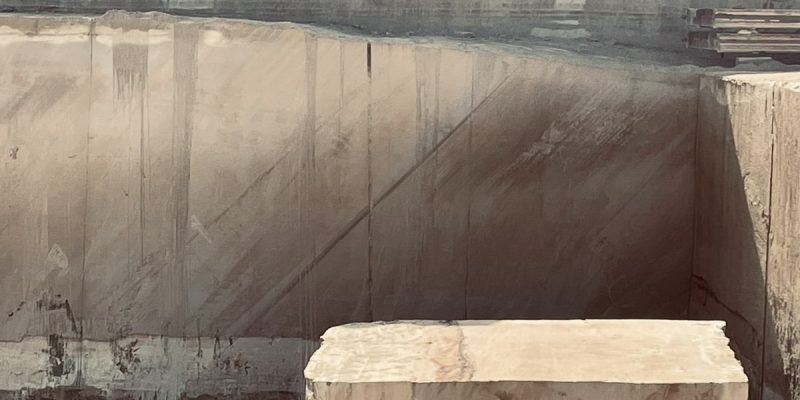
In Les Borges Blanques (Lleida), where SAEZ Sandstone has operated since 1965, the quarries yield large-format sandstone blocks with shades ranging from soft beige to deep brown, including distinctive veins that make each block unique. This natural origin gives sandstone an identity that cannot be replicated artificially.
Sandstone in the history of European architecture
The use of sandstone in Europe is as old as monumental architecture itself. Along the Rhine, medieval cathedrals such as Strasbourg and Cologne were built with this material, valued for both its durability and its relative ease of carving. In Scotland, England, and Germany, entire towns and cities still display sandstone façades and walls that have withstood centuries of exposure to the elements.
In the Iberian Peninsula, sandstone also played a key role in fortresses, Renaissance palaces, and civil buildings. Its ability to combine robustness and beauty made it the ideal stone to convey solidity and prestige. Wherever it was used, sandstone not only fulfilled its structural purpose but also provided a warm and timeless aesthetic.
The contemporary transformation of sandstone
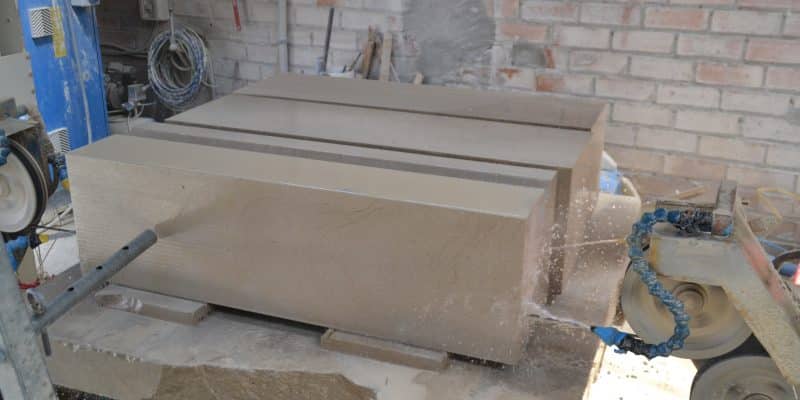
Today, sandstone continues to be a central material in architecture, but its applications have expanded thanks to modern extraction and processing technologies. SAEZ Sandstone transforms large-format blocks into calibrated slabs, paving stones, façade cladding, and tailor-made pieces.
Diamond wire cutting, thickness control, and specialized surface finishes allow sandstone to adapt to contemporary designs—from ventilated façades to high-traffic pavements. In international projects, sandstone achieves the perfect balance between tradition and modernity: it brings the warmth of a natural material and the precision of an industrial product.
A sustainable and durable material
At a time when architecture seeks to minimize its environmental footprint, natural stone offers unique advantages. Sandstone requires minimal processing compared to artificial materials, has a long service life, and can be reused in new applications.
Responsible extraction has also become essential. At SAEZ Sandstone, we operate with sustainability criteria that include quarry restoration, efficient use of water and energy, and waste valorization. Each block delivered to the market is not only a building resource but also the outcome of a broader commitment to the environment.
Sandstone: material identity for the future
The strength of sandstone lies in its timeless character. It is a material that connects past and present, and it will remain relevant in the future. Its geological origin reminds us of the deep scale of nature, while its architectural application demonstrates the human capacity to transform this resource into spaces that inspire and endure.
At SAEZ Sandstone, we see stone as a material narrative. Every project we are part of is an opportunity to translate this geological story into an architectural language that combines aesthetics, durability, and sustainability.
Sandstone is not just a resource—it is an identity. It is how the earth becomes architecture, preserving memory while projecting into the future.
Do not hesitate to contact us for further information